At the end of 2022, two posts landed within days of each other. A Steam announcement said that the rights to Grit Paintball had moved to my small business, Infima Labs, which I formed with the game’s original developer. Then the Snapshot Season 3 finals VOD preserved the America West championship. I was on the winning roster. In that short span, the public record caught me finishing a 12-0 season in one VR paintball game and becoming an owner of another.
Player
Snapshot is VR speedball: two teams, inflatable bunkers, breakout timing, memorized lanes. The reason a VR version works as more than a novelty is that speedball is a game of layout knowledge—where you can shoot from, where you can be shot from, which lane matters in the first three seconds. That knowledge transfers between the real sport and the simulation because the layouts themselves transfer. In Season 3 we played on real event layouts, including NXL World Cup 2021.
Jigga got me into the game. We have known each other since middle school, and we may still have been in it when the two of us played tournaments on a real field. He invited my son and me over to try Snapshot, and afterward he and I treated VR as a way to practice for physical tournaments. The physical version meant buying bunkers, paying for paint, arranging a day, then getting only a handful of points with long gaps between them. In VR we could play thousands of rounds. Buying the same volume of paint would have cost hundreds of thousands of dollars, but the more important difference was cadence: another point began immediately.
After something like six to nine months of that practice, I returned to a physical field with awareness I had never had before. The first moment I recognized it, I held a lane that an opponent walked through, then immediately got up and bunkered a second player because I knew everyone else would be looking toward the first elimination. I was calling positions and following through on moves that had become close to automatic. The layouts transferred, but so did the repetitions.
I had bought Reliable Random the game in the first place, just to get him to try it; once he did, both of us landed on a team Jigga was assembling right before Season 2 of VRML’s Snapshot division, America West. Reliable clicked the invite first—I sat on mine for days. When Jigga left for another team, the two of us kept what remained, renamed it Dead off Break, and eventually played against him. I was nominally going to be captain, and we simply never changed it, so Reliable ran the team: he recruited, managed the roster, and picked the name, because he had taken it on and was better at that kind of thing. I would notice the same split from the other side soon enough.
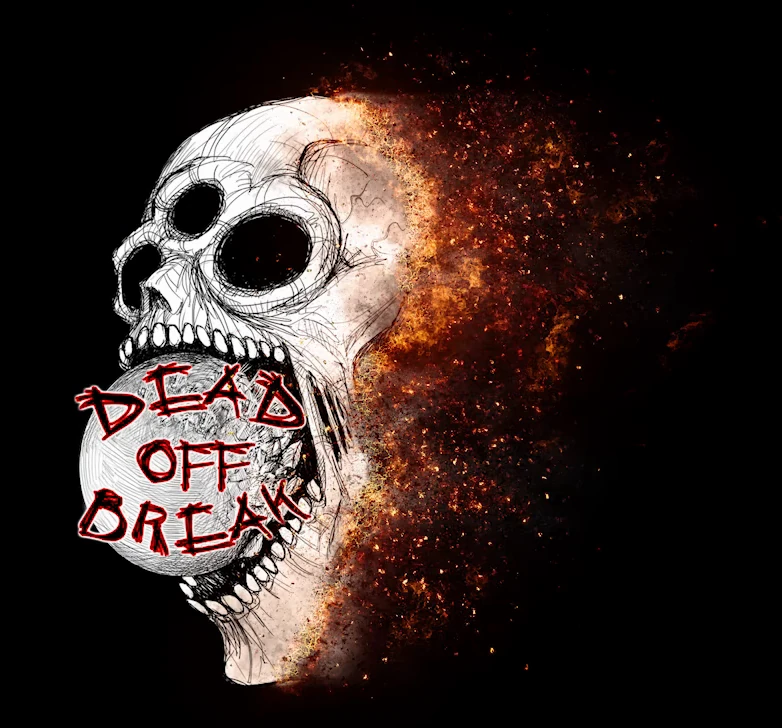
The name was Reliable’s joke: you are dead off the break when a lane tags you in the first seconds. It curdled into a threat as we got good, though I tried, and lost, to talk everyone into changing it. In hindsight the joke beat anything I pitched.
The Season 3 mini-doc uses the burning world-eater logo; the retirement retrospective shows it sketched, burning, charred, and finally in a top hat and monocle.
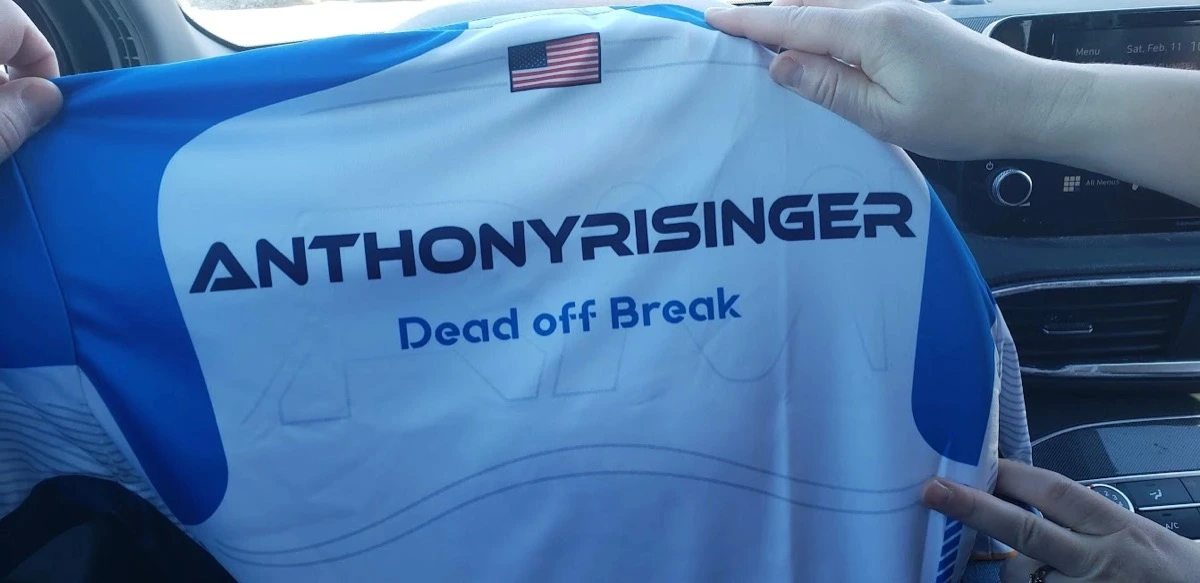
The archived standings record 8-0 in the regular season and the #1 seed. We won through the playoff bracket, 12-0 overall; the roster retrospective records the same season and lineup. We split a $250 prize, and everyone on the winning roster got a team jersey.
I played two seasons in America West: a fourth-place finish, then the title. Scheduled practice and matches made server problems immediate. Latency is not an abstraction when it decides whether your snap shot lands. Server availability is not an abstraction when practice depends on a lobby existing.
Operator
Between joining the roster and the championship, I built Snap Game Services—a dedicated server network for the same game, public 24/7 lobbies across three US regions. The engineering story lives in its own piece; the short version is that I built regional hosting around the game’s existing server: lobby state parsed from log streams, idle cost cut with cgroups, transatlantic latency cut with a socket shim, all without the ability to patch a single byte of the game.
The server also emitted detailed JSON when a player was shot. I collected and compressed those records for years, expecting that the positions and event timing might eventually answer questions I had not formed yet. I still have the archive. I never analyzed it, not once. The result I can actually claim came from the repetitions themselves, not the data I saved about them.
From the roster, the community was opponents and teammates. From the server console, those same people were load: who showed up at 2 a.m., which regions were underserved, what a lobby cost to keep warm, what broke on patch day. I wanted the server to exist, then became the person paying for that existence.
The competitive scene I played in partly depended on infrastructure I ran. The lobbies were public and the league ran its own matches. My rivals were also my users.
Owner
The third position came through a different game entirely. Grit Paintball is a VR tournament paintball trainer—same sport, different simulation, built by a solo developer. Deadbolt Custom Works no longer owned the game’s rights or IP; the original developer and I had taken them on through our small business.
I was still on a roster, still running lobby infrastructure, and now responsible for another game’s development.
Owning Grit stretched the horizon beyond a layout or a weekend’s uptime. I had to care whether the game would still build against the next engine and the next headsets. It also meant trying to think like a business: what could be charged for, whether multiplayer should come before something else, what to build first. Those were not questions a player asks. Almost none of that work was visible from inside a lobby.
Some of what it looked like is in the company’s mail. In January 2023 I was talking with a multiplayer-backend vendor about cluster topology and about what happens to a competitive match when a node is lost, and describing us plainly as two people with a game that was not big. That December, students writing about paintball asked us for impact data. Grit had never collected any. The nearest thing I had was the match data from Snap, which came from our direct competitor, and I said so. Early in 2024 we were porting the game to the engine’s entity component system and working out whether each shot’s origin and impact could be computed up front, so the physics engine would not have to run at all. By January 2025 I was writing to my co-owner that I was still in love with all of it, but that it had not been in the front.
Retirement
After Season 3, I retired from the roster. The archived team bio records both that retirement and the team’s four-title run from Seasons 3 through 6. Three of those championships came after I left.
I kept working on the other two parts: Snap ran for another few years, and I still co-own Grit.